Hybrid/electric cars for under AUD $40k (USD$26700)

Hello people and welcome to this edition of Right Car. Right now, with climate change being a major issue and part of the solution being cars with partial or complete electrification, it makes sense that this month’s edition is about them. So today I will be compiling a small list of my favourite and best value for money hybrid and electric cars you can buy in Australia for what most people would consider relatively affordable. If you are in other markets, you will have to do your own research to find if these cars are available. As always, I will put an image of all the cars I mention in this post at the bottom.

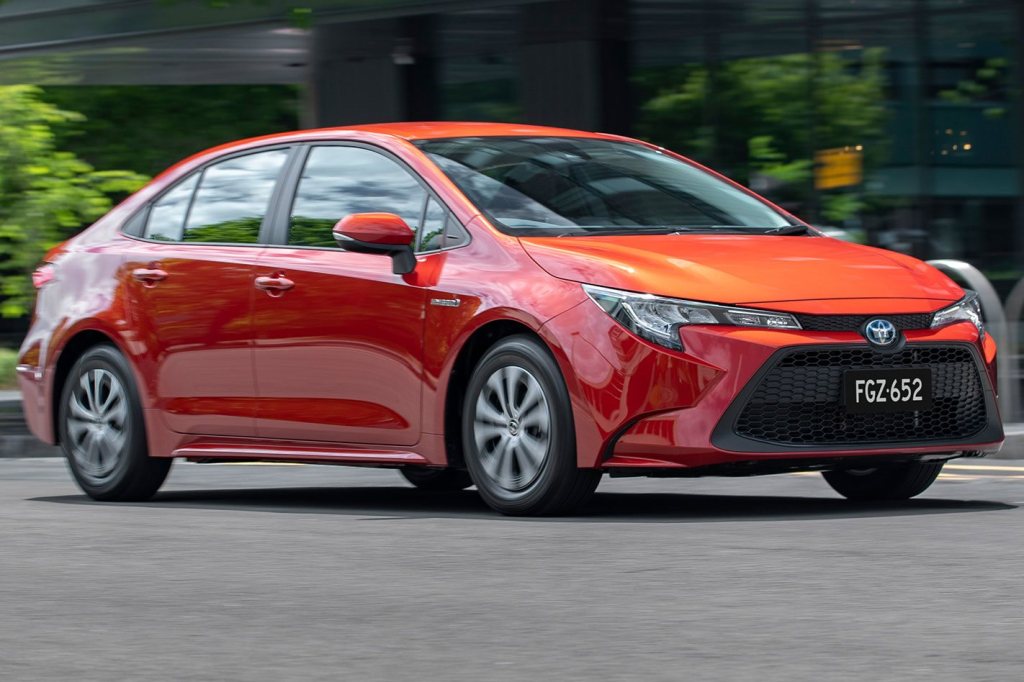
Toyota Corolla Hybrid: This could quite possibly be one of the world’s favourite cars. It’s small, comfortable, reliable, cheap and just generally a very good car. The hybrid version of this car makes it even better as it makes you feel good because you know you’re having a very small impact on the environment by driving a car with fuel economy of 4.2 L/100 km (56mpg) while enjoying a car that you can get for low AUD30k’s (USD20k’s) nicely specced.

Toyota Prius: If you think the Corolla is too thirsty or you are a taller person, you should probably consider the Toyota Prius. Although it is very similar to the Corolla, it’s a bit taller so if you had trouble fitting in the Corolla because you’re tall, should fit in the Prius a bit easier. It is also a bit more economical with fuel economy of 3.4L/100Km (69.2mpg) and a bit more expensive with a well-specced version costing pretty close to the barrier.

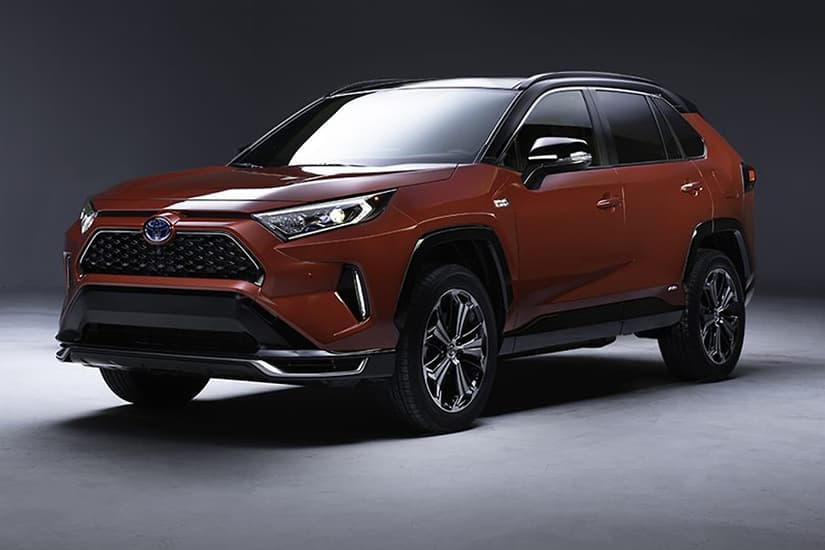
Toyota RAV4 Hybrid: If you are seeing a trend here, you are probably making one of two assumptions. One being I’m a Toyota hybrid fan boy and the other being that Toyota make wonderful hybrid cars and suvs. This time, it’s a bit of both. This is because, as mentioned in my Corolla blurb, they make genuinely great cars for the price point and their hybrid cars make them even more appealing. This is the same for the RAV4 as if you want a small, quite cheap, reliable and economical hybrid SUV, this is probably your best bet. With fuel economy of 4.7L/100km (50mpg) and a price of about AUD38000 (USD25300) for a relatively well specced version, if this doesn’t tick all your boxes, I don’t know what will.

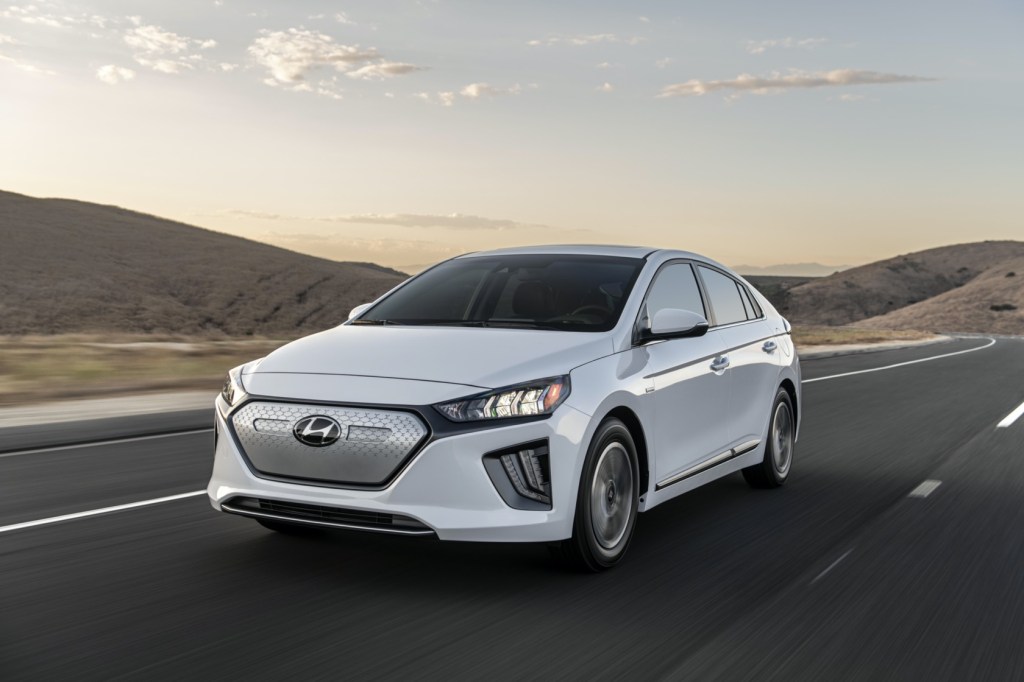
Hyundai Ioniq: The Hyundai Ioniq is very similar to the Toyota Prius. They both have the same dimensions and they even have the same starting price. But what sets the Ioniq apart from the Prius is that it is offered as a plug-in hybrid and a full electric car. This may the cars ultimate selling point because it means there is more variety over the Prius. The electric version starts at AUD42000 (USD28000), however, but if going AUD2000 (USD1300) over-budget is a deal-breaker is up to you.

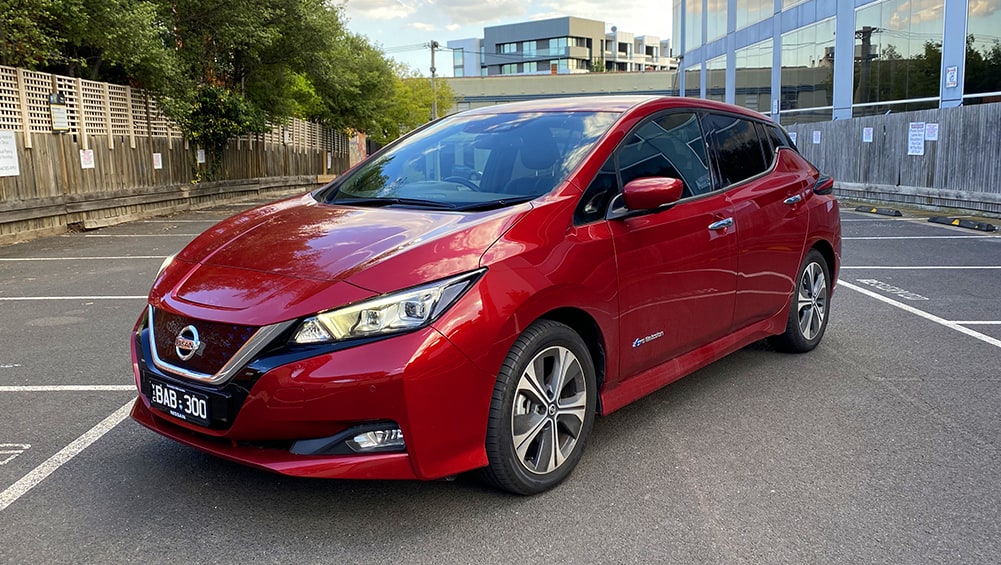
Nissan Leaf: The Nissan leaf, the only electric car from Nissan, is a competitor to the electric Ioniq and a possible electric alternative to a Prius. What might scare buyers away though is the fact that the starting price for a new leaf is AUD50000 (USD33300). However, you can get 2 year old Nissan leafs of the same generation as the current leaf for AUD42000 (USD28000), which is the same price as a base electric Ioniq.

Sorry this edition was so short, I only realised that new sub-$40k hybrid and electric cars are relatively hard to come by when I started and it was the only idea I had. I promise to make next month’s edition longer and more informative to make up for this week’s short edition. Make sure you follow me so you don’t miss the next edition, it’ll be worth it.

Thanks for your time today and remember, if you want to tell me something or ask my opinion on a new car you are thinking of buying, feel free to contact me via the Contact page. Also, share this with your friends or anybody you know who’s looking for a new car as I would like to get this a bit more wide-spread. Thanks.
Toyota Corolla Hybrid
Toyota Prius
Toyota RAV4 Hybrid
Hyundai Ioniq (electric version pictured)
Nissan Leaf

SUVs or wagons for families with a 6 foot+ member

Hello and welcome to the March edition of Right Car. This month I will be giving advice on a request my aunty gave me at Christmas time. This request was that since they were going to have a 2nd baby and her husband is an ex-rugby player, they needed a car with more rear legroom as a child seat would not fit behind the seat he was sat in. They also wanted more boot capacity so they could fit a pram and a fairly large Labrador in the boot together. So, all in all, this meant they wanted a car with a longer wheelbase to give more rear legroom and a bigger boot. So in today’s post, I will be giving you the options that I gave them and some details about these cars. As always, I will leave a picture of all the cars I mention at the bottom.

Land Rover Discovery Sport: The Land Rover Discovery Sport is a compact luxury SUV from the British luxury car company, Land Rover. The Discovery Sport is a smaller version of the regular Discovery and also quite a bit cheaper. The Discovery Sport is 35.9 cm (14.13 inches) shorter, 9.6 cm (3.78 inches) narrower and 23.6 cm (9.29 inches) shorter. It is also AU$13,000 cheaper for the respective base models (before options) and about AU$46,000 for the respective top of the range models. Although the Sport is AU$13,000-AU$46,000 cheaper than the Discovery, you still get most of the stuff. For instance, on the top-spec discovery sport you get Premium LED automatic and self levelling headlights (will move the direction of the beam to show you as much of the road as possible), active cruise control (will steer and work the pedals for you), 20-inch wheels, Blind Spot Monitoring, emergency braking, electronic gauge cluster, leather steering wheel and memory front seats along with many more for AU$82,900. If you wanted these features in a similarly speced Discovery, you would have to pay AU$10,000 dollars more. The wheelbase is 247.1 cm (97.28 inches) long and since the Discovery comes standard as a 7-seater,like the bigger and more expensive Discovery, the boot capacity is enormous at 754 litres (26.7 cubic feet).

BMW X3: The BMW X3 is, like the Discovery Sport, a compact luxury SUV but instead of being British, it’s a German one. This car, unlike the Discovery Sport though, is only a 5 seater. Despite this, the BMW X3 is about 20cm (7.87 inches) longer than the Discovery Sport. This would benefit occupants both in the front and back as they would have more room for their feet. Again, despite the BMW X3 being longer than the Discovery sport, the BMW X3 only has a boot capacity of 550 litres (19.42 cubic feet). This is due to the fact that the X3 is only a 5 seater and therefore doesn’t need a massive boot to put seats in. The X3 starts at AU$63,900 and goes all the way to AU$83,900. The base model has 19 inch wheels, rain-sensing wipers, tri-zone air conditioning, Sat-nav and automatic LED headlights and running lights. The top of the range has all of these things but adds leather seats, keyless entry, an electric boot-lid and a 360-degree camera.

Mazda 6 Wagon: The first wagon on this list is the absolutely superb Mazda 6 Wagon. Being a wagon, you would expect the Mazda 6 Wagon to be shorter than the SUVs mentioned above. Indeed it is with a height of 145 cm (57.09 inches). The 6 Wagon is 21.9 cm (8.62 inches) shorter than the X3 and 24.2 cm (9.53 inches) shorter than the Discovery Sport. Being Japanese, the Mazda 6 offers great value for money with prices ranging from AU$34,490 to AU$56,500. Also, the Mazda doesn’t miss out on creature comforts as as standard on the base model you get radar cruise control, sat-nav, LED headlights and running lights, heated power mirrors, head-up display, rain-sensing wipers and one-touch front and rear windows among a very long list. On the top of the range model you get all this plus heated and cooled front seats, 360-degree camera, sunroof, heated rear seats, nappa leather seats and a heated steering wheel among other things. It has a wheelbase of 2.75 m (108.27 inches) and a boot capacity of 506 litres (17.87 cubic feet).

Skoda Superb: Speaking of Superb, let’s talk about the Skoda Superb. The Skoda, over the last 10 years has been the station wagon to buy if you want a station wagon. This is because it has an enormous boot with a capacity of 660 litres (22.07 cubic feet), is very comfortable, has an enormous amount of rear legroom and has a price range of $43,990 to $61,690. Like the 6 Wagon, the base model does have some creature comforts in the form of adaptive headlights, Apple CarPlay and android auto, a chrome grille, LED daytime running lights, cooled front center console, cooled glove box, heated front seats, keyless entry and go, leather seats and a leather steering wheel among other things. The top of the range gets all this plus paddle shifters on the steering wheel, hands-free boot opening as well as an electronic boot-lid, Adaptive Cruise control and chrome exhaust tips.

Mazda CX-5: The Mazda CX-5 is like the SUV version of the Mazda 6 Wagon. This is because it has the exact same boot capacity as the 6 Wagon, is actually 31.5 cm (12.4 inches) shorter than the 6 Wagon and is the same width as the 6 Wagon. As it’s an SUV, it’s taller than the 6 Wagon by 22.5 cm (8.86 inches). It also has similar technology and creature comforts and a similar level of value for money.

Thankyou for coming and please hit the follow button so you know when my next post is up. If you have any questions about one of my posts or want my opinion on a recent purchase, please use the contact page.

Also, I’d love your feedback on this or any post. And please share this with your friends as i would like to get this a bit more well-known. Thanks.
2020: The most important cars

Hello everyone and welcome to the January edition of Right car. In this month’s edition I will be taking you through and explaining the coolest and most interesting cars of 2020, according to me. I will keep this list short, consisting of only the 10 coolest and most interesting cars as as always, I will be putting pictures of them all at the bottom of this post. So sit back, relax and enjoy this trip through the year 2020 in terms of automobiles.

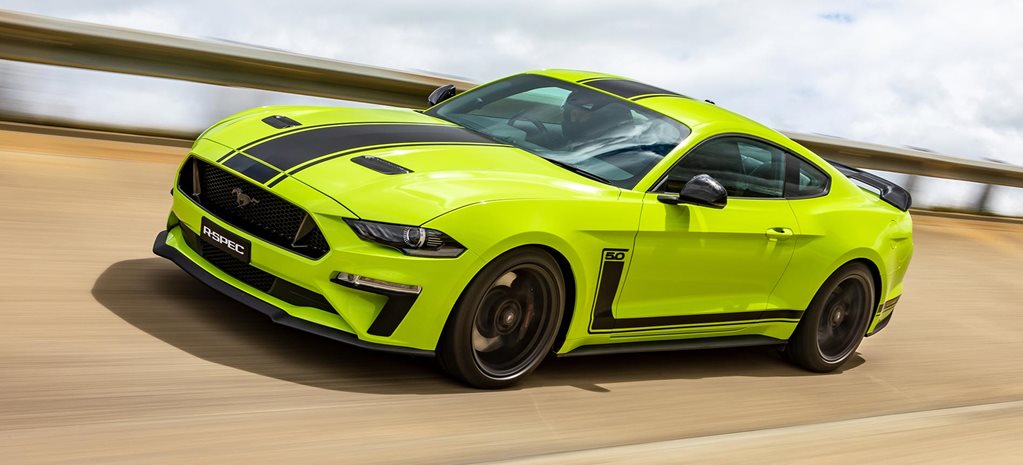
10: Ford Mustang R-Spec. This car is the first car to developed/conceived/built in Australia since Toyota closed its Altona factory in October, 2017, marking the end of Australian-built, mass-produced cars. The Mustang R-Spec is a collaboration between Ford Performance and Herrod Performance, a tuning company in Adelaide, South Australia. This Mustang, because of being partially built by a tuning company, produces 500kw (670hp) as its peak power output, thus making it the most powerful Mustang ever sold in Australia.

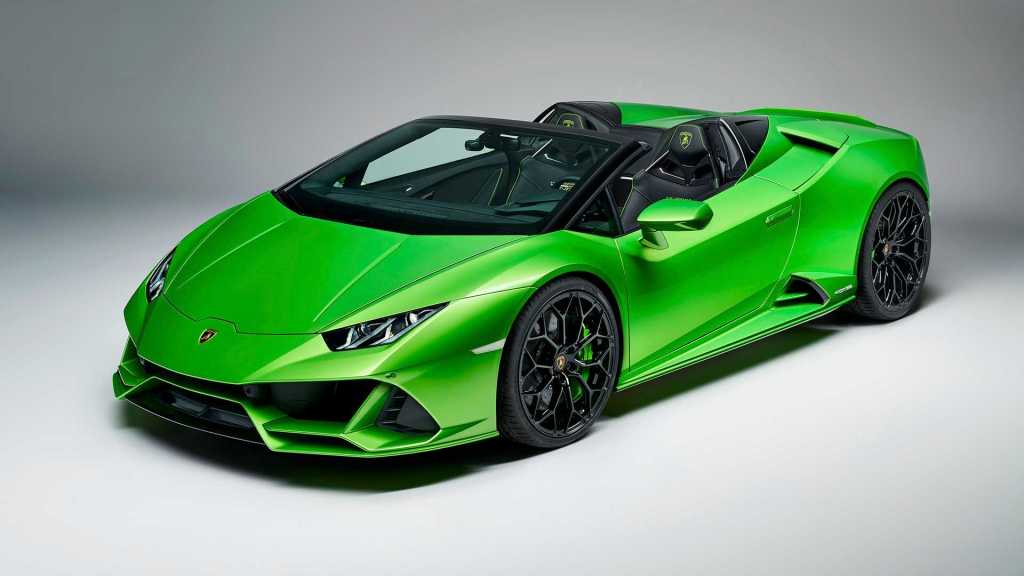
9: Lamborghini Huracan Evo Spyder. This car is basically a Performante Spyder but with slightly different styling and a much lower price tag. This is because the Evo Spyder has the same power and torque numbers as the Performante and even has the same steering system with the Evo even retaining the Performante’s Rear-Wheel Steering system, making it easier to make tight turns at low speed and keeping it stable when cornering on the racetrack.

8: Porsche 911 992 Manual. I think with the manual transmission, Porsche has just made the best 911 ever, in my opinion. This is because it has great technology, a wonderful interior and infotainment system, an extremely potent and responsive engine with an amazing exhaust note and now a manual transmission which I assume will be flawless. I will even go so far as to say that I think Porsche has just made the greatest driver’s car for sale in Australia.

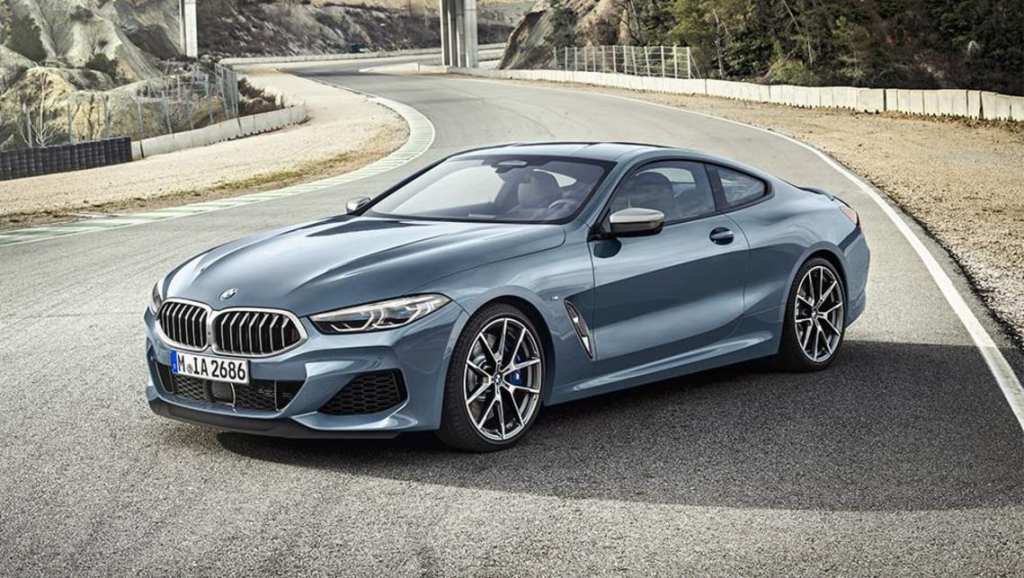
7: BMW M8. This car is a higher performance version of the M850i, the previous high-performance version of the BMW 8 Series. This car has more power and torque than the M850i, a standard fare with high-performance versions of regular cars, less weight, a lower centre of gravity for better cornering and a higher top speed. There is also a competition variant and a Gran Coupe of the M8, the competition variant lowering both the centre of gravity and the weight of the car even more and the Gran Coupe essentially turning it into a sedan.

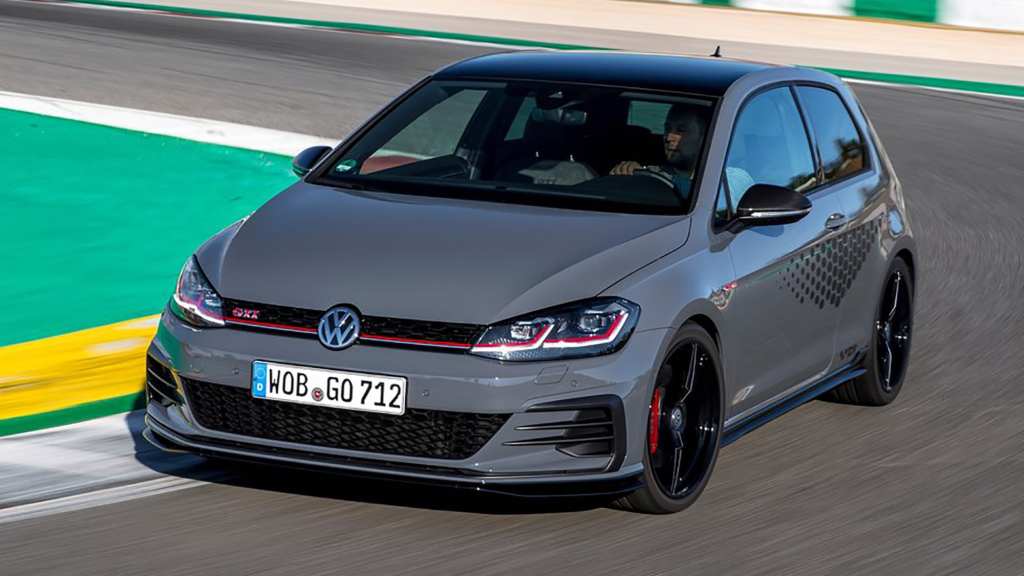
6: Volkswagen Golf GTI TCR. The Golf GTI TCR was inspired by the race car that bears the same name. For inspiration from that car, they took the engine, which has dramatically more power and torque than the regular GTI’s engine, threw it in a GTI’s body and lowered its weight. The finished product is a car that is more powerful, faster to 100km/h (62mph) and has a higher top speed than the regular GTI. A fitting last hurrah for the Mk. 7 Golf.

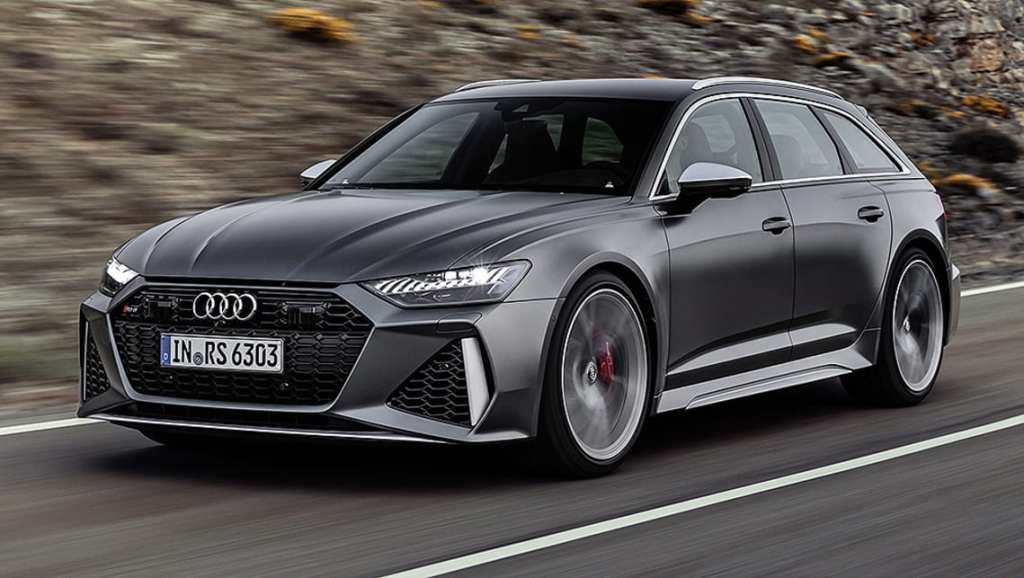
5: Audi RS6 Avant/RS7 Sportback. These cars are the last cars that Audi Sport are putting their 4.0L Twin-Turbo V8 in, except for the SQ7 and S/RSQ8. In these cars, the V8 is making 600 hp (447 kW). This is enough power to send the cars to 100km/h (62mph) in 3.7 seconds. They are also very differently styled to the A6/7 on which they are based in order to make them look appropriately RS-like. They also have some special menus in the infotainment screen and digital gauge cluster to display various performance readings.

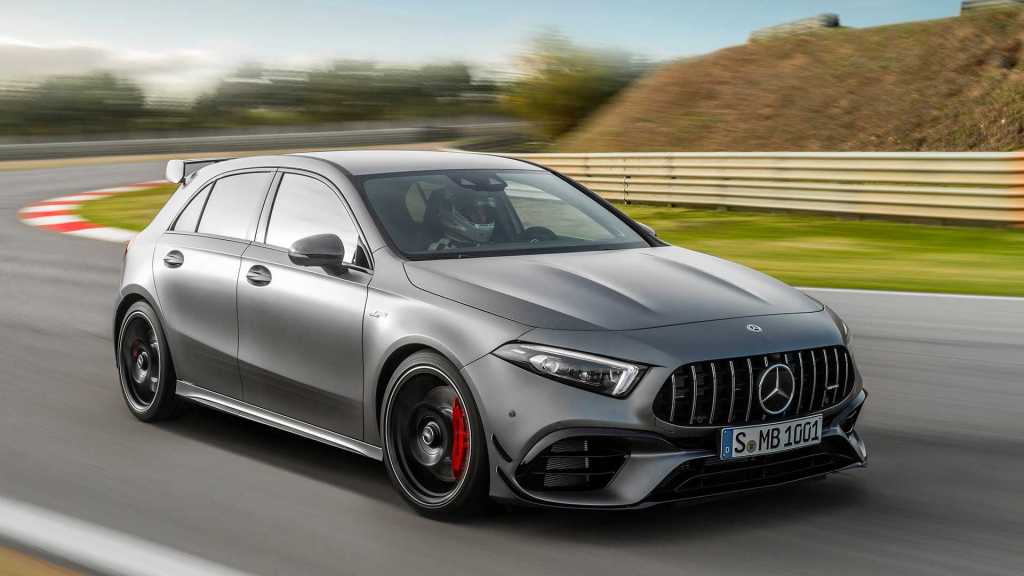
4: Mercedes-AMG A45. This car is special for one main reason. Not that it does the 0-100km/h (62mph) in faster than any other hot hatchback or the fact that it has class-leading technology and comfort. No, this car is special because it has the most powerful four-cylinder engine fitted to any car. This engine produces an absolutely mind-boggling 310kw (422hp). You can also get this car in sedan so you can disturb the distribution of your luggage as well as disturb the position of your head in the car (shoving it back against the headrest).

3: Porsche Taycan. This car is the first fully-electric car from Porsche. This car is an absolute wonder of engineering as it has similar performance to a Porsche 911 without emitting a gram of carbon dioxide in the process. This car also has another thing on it’s side, the amount of times you can repeat the runs with consistent results. To put this into context, let’s take the Tesla Model S P100D for example. The Tesla is half a second quicker than the fastest Taycan to 100km/h (62mph) but the Tesla takes ages to optimise its batteries for this kind of performance and you can only get these times for 1 or 2 runs. The Taycan, on the other hand, immediately optimises its batteries and can consistently achieve it’s times over numerous runs.

2: BMW M2 CS. This car is also a wonder of engineering as the people at BMW M have managed to squeeze the engine from the M3 and M4 into this car, making it the most powerful M2 ever with 327kw (444hp) of power. It’s body has also been filled with carbon fibre and alcantara, with almost every surface covered with the stuff. It has also been fitted with new, stiffer suspension to help it stay flat in the corners so you can go pretty much flat out around a race track.

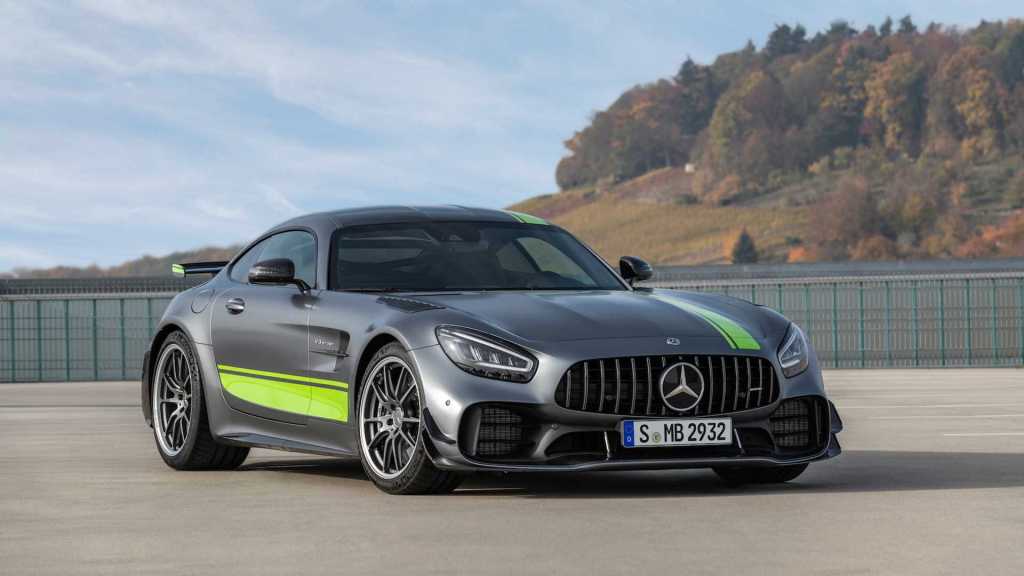
1: Mercedes-AMG GT Black Series. I put this as number one as this will, when it comes out, be quite possibly the coolest car of the 2000’s. The modifications to these cars will include a massive increase in power and torque, a dramatic reduction in weight, lowered and stiffer suspension, more aero and wider and stickier tires. If Mercedes decides to put a manual in this car, it could quite possibly be the coolest car in the history of the automobile.

Thankyou for coming and please hit the follow button so you know when my next post is up. Remember, if you want help choosing the right car for you please get in touch on the Contact page.

Also, I’d love your comments or feedback on this or other posts. And please share this with your friends as I would like to get this a bit more well-known. Thanks.
Ford Mustang R-Spec
Lamborghini Huracan Evo Spyder
BMW M8
Volkswagen Golf GTI TCR
Audi RS6/RS7 (RS7 looks basically exactly the same but with a sloping roof )
Mercedes-AMG A45s
Porsche Taycan
BMW M2 CS
Mercedes-AMG GT Black Series

Happy Birthday to you, Happy Birthday to you, Happy 100 years Bentley, Happy Birthday to you

Hello everyone, and welcome to this month’s edition of Right Car. This year, as you can tell from the title, is the 100th anniversary of Bentley. In this month’s edition, I will talk you through all the significant events that have happened to bentley during the last 100 years. Also, I appologise for not posting last month, I was very busy studying for my end of year exams, but now that they are over, I will be going back to monthly posts. Also, any cars that I mention I will put a picture of at the bottom of the post.

Bentley was founded in 1919 by 2 brothers, Walter Owen Bentley and Horace Millner Bentley, in Cricklewood, North London. After registering the company in August of 1919, The Walter Owen Bentley, or W.O as he was better known, built a chassis with a dummy engine to exhibit at the 1919 London Motor Show in October of that year. Using his connections with the Royal Flying Corps, he was able to have an engine designed, built and running by that December. First deliveries were planned to take place in June 1920, but due to development issues, first deliveries took place about a year later in September of 1921. Soon after deliveries, Bentley’s became widely acclaimed for their durability.

Bentley’s racing pedigree started out in the 1922 Indie 500 when they entered a modified car driven by Douglas Hawkes, accompanied by mechanic H.S Brownie. Over this 500 mile (800 km) race, Douglas gained 6 places, starting 19th on the grid and finishing in 13th with an average speed of 75 mph (121 km/h). After this race, Bentley experienced a huge am0unt of success in the 24 Hours of Le Mans, winning 5 races over 7 years. Their first win in 1924 was in the hands of John Duff and Frank Clement in a Bentley 3-Litre. Then, from 1927 to 1930, Bentley won all 4 24 Hours of Le Mans races. The 1927 win was in a Bentley 3-Litre, the 1928 win in a Bentley 4 1/2 Litre and the wins in 1929 and 1930 were in Bentley Speed Sixes. After this race, Bentley announced they would stop racing as they had learnt enough about speed and reliability.

The Wall Street Crash of 1929 and the resulting Great Depression bought demand for the expensive Bentley’s to an almost complete standstill. This lack of demand resulted in niether the company or the guarantor being able to pay the 2 mortage payments owed in June 1931. This resulted in them being acquired by Rolls-Royce on 10th June 1931. When Rolls-Royce acquired Bentley, they did many things. These things included trademarking the winged B on behalf of Bentley and selling the Cricklewood Assembly Plant. Bentley also stopped production for 2 years until 1934 while they transfered all their resources and machinery into Rolls-Royce’s Derby facility. They also confirmed that they would be continuing to race under financial support of Rolls-Royce. W.O Bentley was unhappy with the role he was given in Rolls-Royce so when he contract ended at the end of April 1935, He left Bentley for Lagonda, the luxury subdivision of Aston Martin.

The cars that Bentley produced under the ruling of Rolls-Royce from 1931 until 1998 were either sporty versions of Rolls-Royce’s, like the Bentley 3 1/2 Litre, or shared chassis parts with Rolls-Royces. In fact, the Bentley 3 1/2 Litre was marketed as “the silent sports car”. The fact that this slogan was used until the 1950’s shows the uncanny similarities between Bentley’s and Rolls-Royce’s over 30 years.

From the 1950’s till 1998 and in a new assembly plant, Rolls-Royce started producing Bentleys that looking completly different to the cars Rolls-Royce were making. These cars include the original Bentley Continental, built between the 1950’s and 1960’s and the Bentley R-Type. Under the Leadership of Vickers from the 1980’s till 1998, Bentley sales had taken a turn for the worst. To combat this, Bentley turned back to their roots and made a high performance, four door called the Mulsanne. Over 30 years of Mulsanne production, their have been at least a dozen different variations but the essence has remained the same. During the 80’s and 90’s, Bentley also made another version of the Continental that took the Right-hand drive market by storm.

In 1998, Bentley was acquired by the Volkswagen group and have been producing the same models of cars for 20 years. The Mulsanne lives on after 30 years, the spirit of the Continental of the 1950’s and 60’s still lives on after originally taking the grand-touring car market by storm over 60 years ago and they have produced something never seen before in Bentley Assembly plants. This has come in the form of an ultra-luxury SUV, called the Bentayga.

Thankyou for coming and please hit the follow button so you know when my next post is up. Remember, if you want help choosing the right car for you please get in touch on the Contact page.

Also, I’d love your comments or feedback on this or other posts. And please share this with your friends as I would like to get this a bit more well-known. Thanks.

Bentley 3 Litre
Bentley Speed Six
Bentley 3 1/2 Litre
1950’s Bentley Continental
2020 Bentley Continental
Bentley R-Type
2020 Bentley Mulsanne
Bentley Bentayga
1990’s Bentley Continental
1980’s Bentley Mulsanne

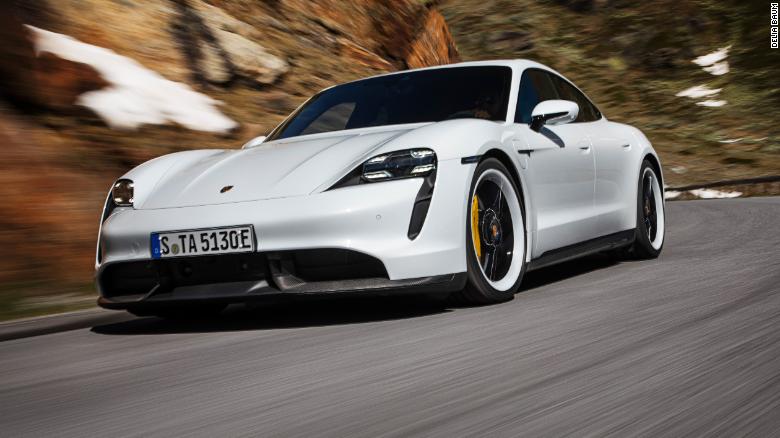
Porsche Taycan

Hello everyone and welcome to the September version of Right Car. Today I will be talking to you about the Porsche Taycan, the first all-electric car from Porsche. So sit, back and relax while we run through all the important details. I will leave a picture of it at the bottom of the post, along with any other cars I mention.

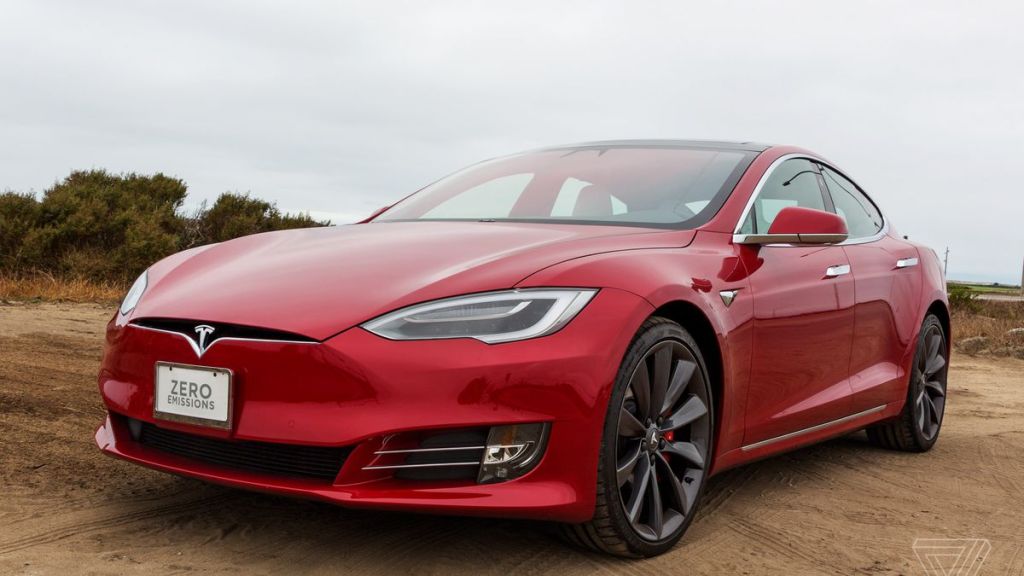
So, like I said above, the Porsche Taycan is the first all-electric car from Porsche and was first revealed, in production form, at the 2019 Frankfurt Motor Show in Frankfurt, Germany. Porsche making an all-electric sports car should not come as a surprise as with all this concern about climate change all around the world, and Porsche maybe thinking if they didn’t get on the hybrid/fully-electric bandwagon then they might lose customers. At the moment, you can only order 2 types, the Turbo or the Turbo S, both with all-wheel drive. Some people think that having a turbo badge on a car without a turbocharger is strange, but I think that people are used to seeing the turbo badge around so they should keep it. The turbo has 500kw (617hp) and 850Nm (627 lb-ft) of torque and can do 0-100km/h (0-60mph) in 3.2 seconds. The Turbo S has 60kw (70hp) and 200Nm (147lb-ft) more power and torque and does the 0-100km/h (0-60mph) sprint in 0.5 seconds less. Some of you who know your stuff will probably be like “hang on, the Tesla Model S P100D can do the same sprint in 2.3 seconds”. That is true but the Taycan, even though it is a little slower, is designed so it can perform these sprint figures repeatedly without having to stop for an hour or two after every couple of runs for the batteries to cool down, like what happens in the P100D. The Porsche Taycan also has a 2-speed gearbox, which hasn’t been seen before in an electric car. This gearbox actually serves a purpose though as the first gear allows you to get off the line as quick as possible with the second gear giving the Taycan good efficiency while cruising. The range is also quite good because of this second gear, the Turbo getting 430km (260miles) of range and the Turbo S getting 400km (245miles) in a single full charge.

When you first look at the car, you may think that it is just an electric Panamera as it has 4 doors, a sloped roof and a big light bar at the back, but although it is based on the Panamera, it is a completely new car. Another thing you will notice is that there is no electric charge port on the rear wheel-arches, like petrol or diesel powered cars. Instead, it is on the front, right-hand side wheel arch. When you get inside the car, you will notice that it looks and feels like a panamera because of its 4 seats and 2 massive screens in the front. One is the gauge cluster which shows your speed and all the other important gauges that anyone needs to have access to, while also having some of the same functions as the infotainment screen, such as navigation and radio information. The other of screens is Porsche’s actual infotainment system which is just perfect with no lag and bright and clourful graphics. You can also option another screen in front of the passenger so they basically get their own infotaiment system. In the back seats, each seat has its own climate zone and seat heating, much like the Panamera. It also has a thing called a “foot garage”, or basically a depression in the under-floor batteries which allows you to have better support for your thighs. At the rear, there is a huge light bar, a rear wing which changes height, depending on your speed and because it’s an electric car, no exhaust pipes. It’s also quite practical as since it doesn’t have an engine it has a storage area in the front as well as in the back so you can carry a little bit more than you could in a normal car.

Thankyou for coming and please hit the follow button so you know when my next post is up. Remember, if you want help choosing the right car for you please get in touch on the Contact page.

Also, I’d love your comments or feedback on this or other posts. And please share this with your friends as I would like to get this a bit more well-known. Thanks.
Porsche Taycan
Porsche Panamera
Porsche 911
Tesla Model S P100D

Happy Birthday to you, Happy Birthday to you, Happy 50th Nissan GT-R, Happy Birthday to you.

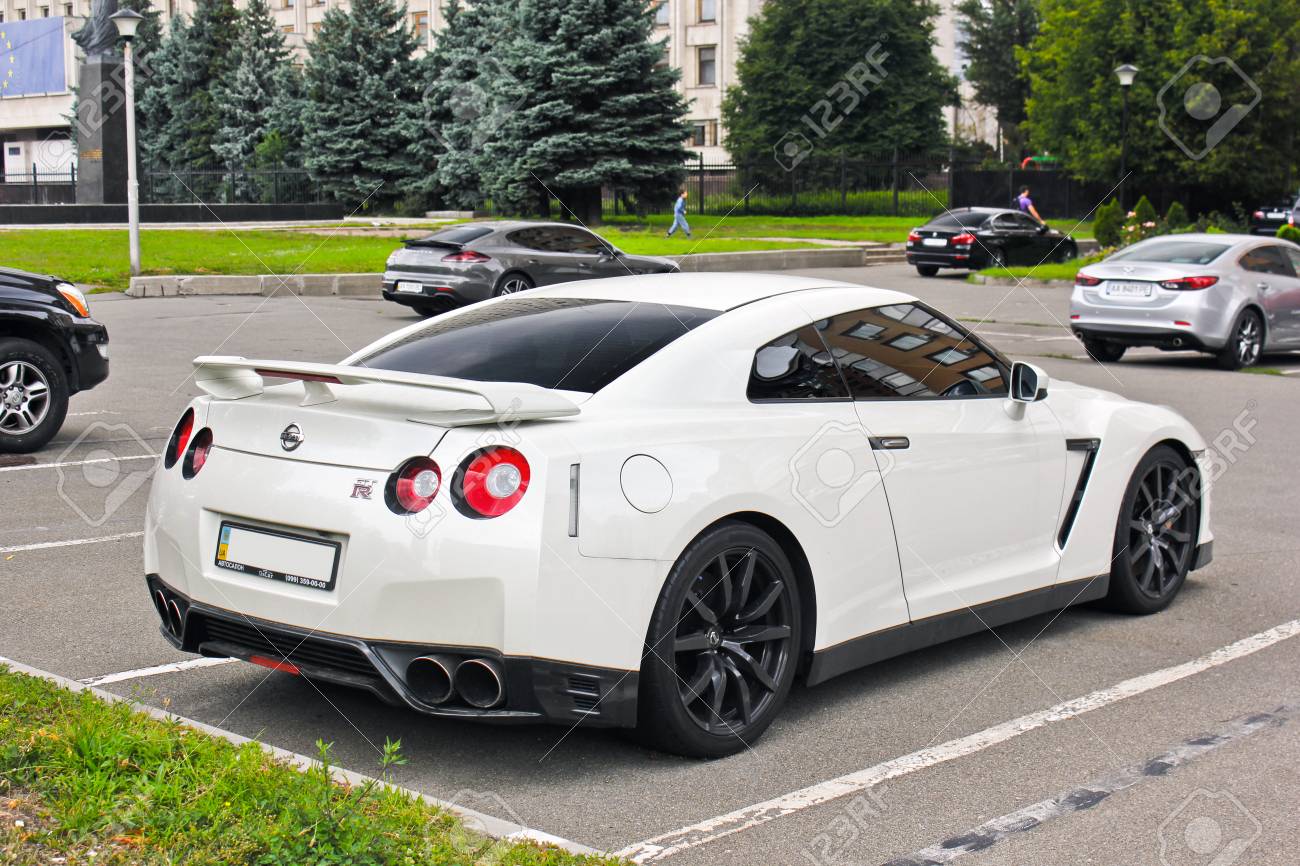
Hi guys and welcome to this edition of Right Car. As you can probably tell from the title, This month 50 years ago, the first-gen Nissan GT-R was revealed to the public. To mark this momentous occasion, I will be talking about the 5 generations of Nissan GT-R, including the current R35. So sit back in your bucket seat, grab a twin-turbo V6 sized bowl of popcorn and get ready for a trip back in time. I will put a picture of all the generations at the bottom of their paragraphs.

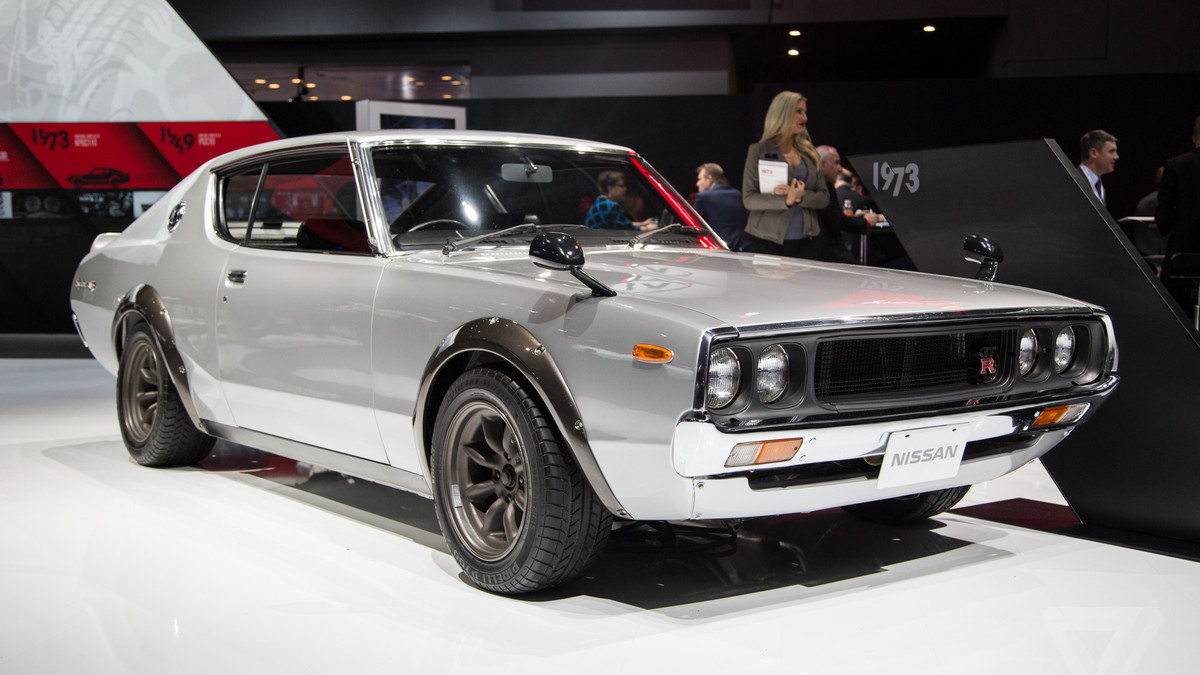
Now to start at the beginning of the GT-R’s life, with the 1969 model. This car was produced from 1969-1972 and had a 2.0-litre inline-six engine. This engine produced 119kW/160hp and 176Nm/130lb-ft. The chassis, known by Nissan employees as KPGC10, sent all of this power and torque to the rear wheels through a 5-speed manual transmission. This car was actually called the Nissan Skyline GT-R and was called this until the 1973 model was cancelled. Believe it or not, the Skyline GTR was only a 4-door sedan until 1971 when it was converted to a coupé.

Next in the history books is the 1973 model. This car had the same engine and power/torque numbers. To seperate this car from the old one, it had disc brakes on both axles and more areo bits. This car’s life was cut short by a petrol crisis in the early 1970’s and as a result, only 197 cars were made. This car was a nicknamed the kenmeri after a popular advertisement featuring a young couple, Ken and Mary. This car was the only new…ish GTR you could buy until 1989, when the R32 was first introduced.

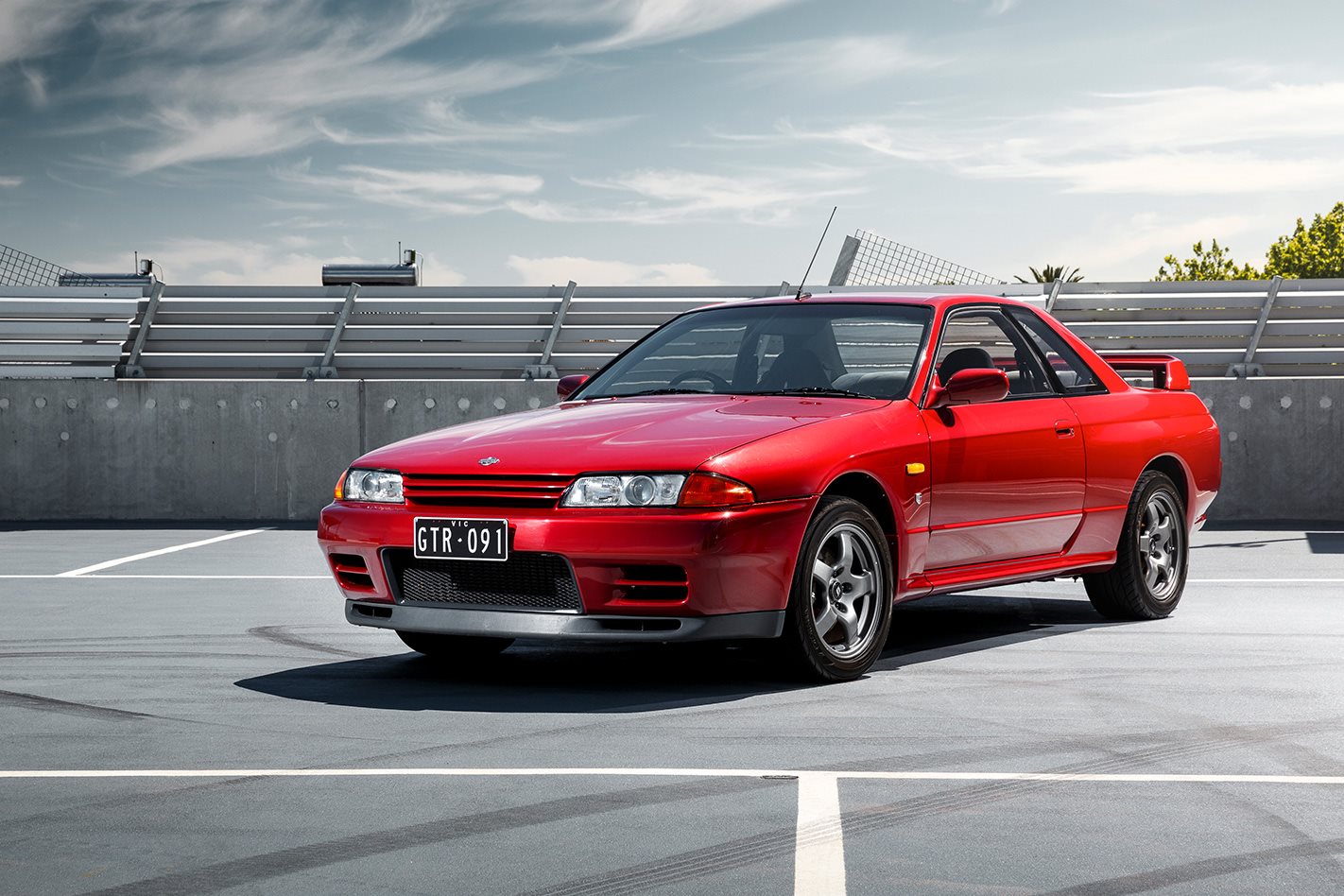
On the 29th of August 1989, Nissan started production of the R32 GTR, perhaps the most sought-after GTR ever made. The R32 had a 2.6 litre twin-turbo inline-six engine that made 206kW/276hp and 353Nm/360lb-ft. This power and torque was sent to all 4 wheels by a 5-speed manual transmission. On the 22nd of Febuary 1990, Nissan revealed their GTR Nismo. This car had more power, more areo bits, less weight and was more reliable than the regular R32. This Nismo was inspired by the Group A touring-car racer that satred it’s career the very same year. The R32 finished production in November of 1994 with 43,937 cars produced.

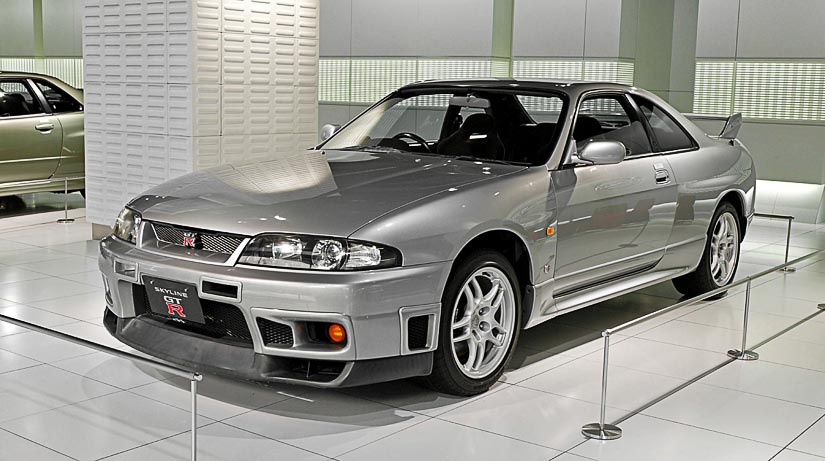
In January 1995, the R33 started production. The R33 had the same engine as the R32 and the same transmission. Although the R32 and R33 shared the same engine, the R33 addressed some of the problems with the R32’s engine, like it’s oil pump drive collar. The R33 was also all-wheel drive. There was also the V-spec model, which was 10 kilos/22 pounds heavier than the regular car and had lowered and stiffer suspension. In 1995, Nissan decided to enter the R33 in Le Mans and made the Nissan GTR LM, which finished fifth in it’s class. Production of the R33 finished in 1998 with Nissan having made 16,668 R33’s.

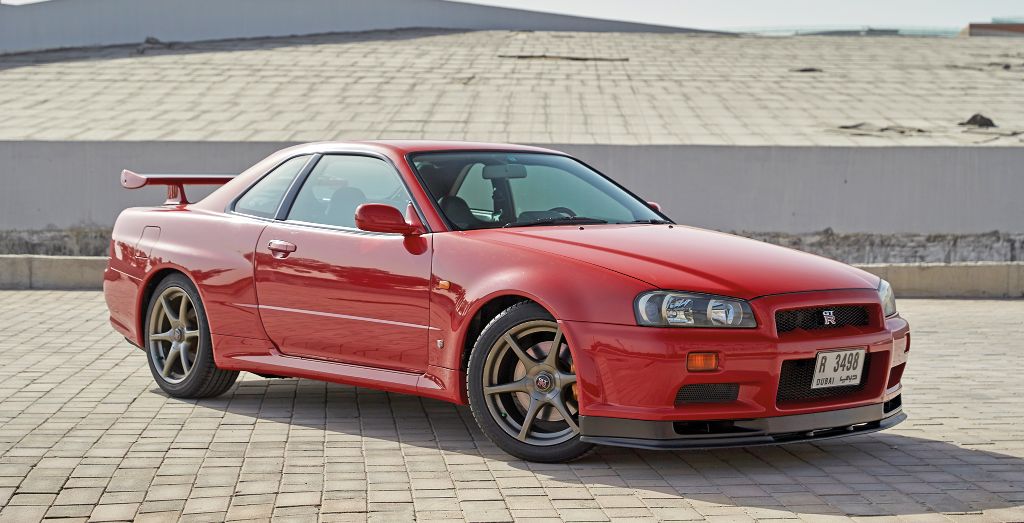
In January 1999, the R34 GTR was revealed. The R34 was revealed in three specifications: the regular GTR, GTR V-Spec and GTR V-Spec N1. The R34 was shorter and had a smaller front overhang than the R33, in response to customers thinking it was too big. A new feature was added to the R34 and this was a screen in the centre of the dashboard that showed you in realtime performance and vehicle data. Production ended in 2002 with 11,577 cars produced.

Now we come to the end of the story, the R35 Nissan GTR. The R35 Nissan GTR has a 3.8 litre twin-turbo V6, The first GTR to have a V6 and not an inline-six, that produces 419kW/562hp. Linking back to the R34 GTR, the R35 has a function in it’s infotainment screen that shows realtime performance and vehicle data. New to the Nissan GTR, the R35 has a navigation system. It also, rather annoyingly, has a speed limiter but that limiter switches off when the car senses you have reached a race-track. In 2007, the Nissan GTR was the most technologically advanced car Nissan had ever made, but it would have to to justify the $190,000 asking/base price. there is also a Nismo version of the R35 that, like the R33 Nismo, had more power, more areo and less weight than the standard car.

Thanks for coming and I hope you enjoyed this 0-60mph/0-100kmh sprint down memory lane. Please hit the follow button so you know when my next post is up. Again, thank you and I’ll see you next time. And remember, if you want help choosing the right car for you please get in touch on the Contact page.

Also, I’d love your comments or feedback on this or other posts. And please share this with your friends as I would like to get this a bit more well-known. Thanks.

Audi E-Tron: what’s it like?

Hi guys, Today I am going to talk you around the Audi E-tron, The first of many all electric cars to come out of Audi’s plants. I decided to do this today to follow on from my Mercedes-EQC review last month and make like a two-part mini-series, and this is the second part. So settle in and enjoy. I will put an image of all cars mentioned at the bottom of this post.

Like I mentioned above, this car is the first of a few different cars to come out of Audi’s E-tron Range. Just like the Mercedes EQC of last month was based on the GLC, The E-tron is based on the Q5. This means that the E-tron is a mid-size SUV just like the GLC and the Jaguar I-pace. It also costs about the same as the EQC at $75,000-$80,000 pre-options.

At the front, the E-tron has a similar grille to the Q5, despite it being fake because there is no engine to cool. Since it doesn’t have an engine to make noise, Audi has fitted the E-tron with an artificial engine noise played only on the outside when in drive or reverse so people hear it coming and get out of the way. I think this, what I call a safety feature, is a brilliant idea and every new electric SUV should follow suit. There was something similar to this when Mercedes launched the electric version of the SLS to keep their drivers awake but that was on the inside of the car so this is the first car to have this tech installed on the outside of the car. It also has different headlights to the Q5.

As you move to the side of the car, the wing mirrors and doors are the same as on the Q5. The only thing different to the Q5 on the side of the car are different wheels and this bit of metal next to the front wheel arch that says E-tron on it. When you press this metal piece, a metal cut-out pops out and folds down so you can stick in the charging cable and get some juice into your E-tron.

At the back of the E-tron, it looks very similar to the Q5 except for one thing, the whole lighting assembly. This is because at the back there is a huge light-bar connecting the 2 tail-lights just like the Audi Q8.

Moving inside the car, the similarities between this and the Q8 continue as the E-tron has the same infotainment system as the Q8. It also has Audi’s digital instrument/gauge cluster that leads in every single class as well as their ultra responsive infotainment screen. In the gauge/instrument cluster, instead of displaying how far till you need to fill up with petrol, it displays how long it is until your battery runs out and in the infotainment screen, if you put a destination into the sat-nav, and the car doesn’t think you’ll make it on a single charge, it will design your route around available charging stations. As well as re-route you to charging stations if neseccary, the car wil suggest that you turn some things off to save energy and add miles/kilometres to your range. It also has a screen to control everything to do with the climate control like the temperature of the air, your heated and cooled seats (cooled seats might be an option but might also be standard), the fan speed and where the air comes out.

The E-tron has a 660-litre (23.31 cubic feet) boot which is bigger than the EQC’s and the I-pace’s and a 60-litre (2.12 cubic feet) compartment at the front where the engine would normally be. This front compartment is where you store the charging cables and you can also store a bag big enough for a weekend away. If you fold down the rear seats, then the boot becomes 1,725 litres (60.92 cubic feet).

The E-tron has an 84 kWh battery pack producing 365kw (490hp) and 551 Nm (414 lb ft) of torque. That is good for 0-100km/h (0-62 mph) in 6.6 seconds and if you drive sensibly you should be able to cover 358km-417km (222-259 miles). It also comes with an 150 kW DC charger but you can option an 11/22 kW AC charger. In my opinion, you do need the AC charger as you will need to charge your Audi E-tron at home between trips.

This will do it for this post, so I will see you back here next month. Remember, if you want help choosing the right car for you please get in touch on the Contact page.

Also, I’d love your comments or feedback on this or other posts. And please share this with your friends as I would like to get this a bit more well-known. Thanks.

Audi E-tron

Mercedes EQC
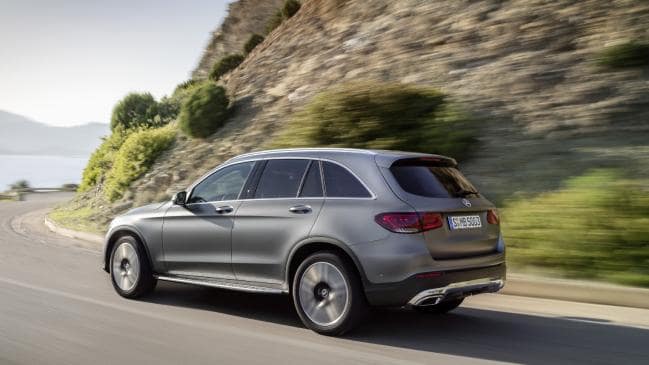
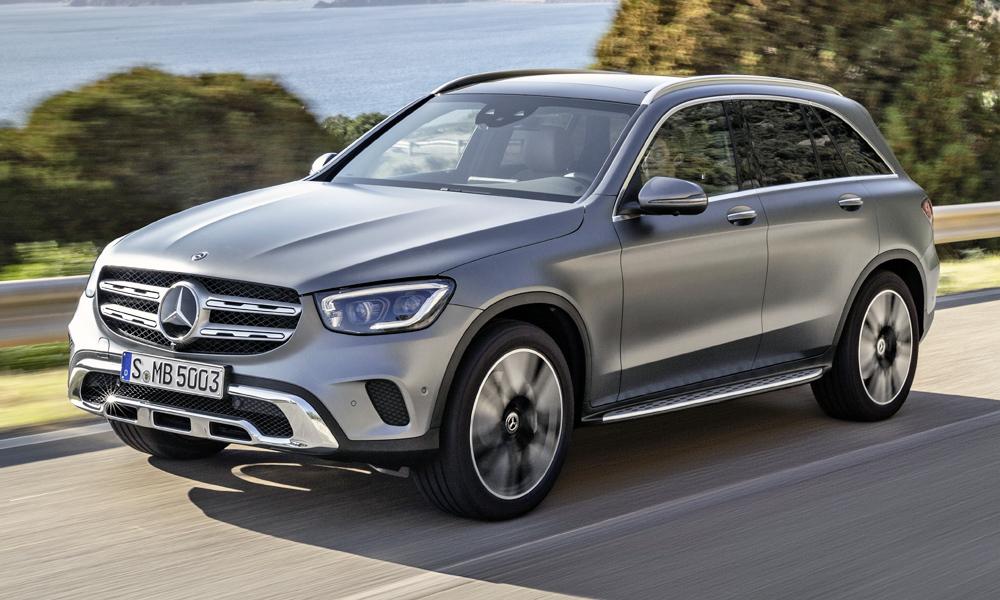
Mercedes GLC
Jaguar I-pace

Mercedes EQC

Hello and welcome to this month’s post in which I will be telling you all about the new Mercedes EQC, The first all-electric SUV from this German brand. With nothing more to say, let’s get into it. I will also put an image of every car I mention at the bottom of this post.

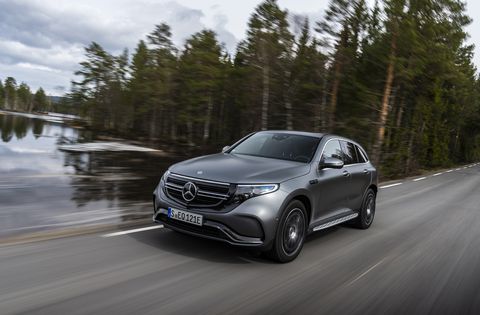
Now, like I said above, the EQC is the first all-electric SUV to come out of Mercedes-Benz. The EQC is based on the Generation EQ vehicle which was shown at the 2016 Paris Motor Show. The final production version of the EQC was exhibited in September in Sweden and the 2018 Paris Motor Show. It also shares many parts, such as the wheelbase and the seating layout, with the Mercedes GLC as it’s basically an electric GLC. The EQC is going to go on sale in Australia in October, in the US half-way through next year and it has already been out in England and The Netherlands for a few months. Specs for the Australian model have not been confirmed yet but Mercedes has told us that it will cost around $140,000.

Moving inside the EQC, you will find that the interior is basically the same as any Mercedes SUV. This meaning that you have the two massive screens in the dashboard, one being the gauge cluster and the other being the infotainment screen. Speaking of the infotainment screen, it is basically the same as in a petrol or diesel GLC. There are only 2 things that make it different. These are that there is a menu in the infotaiment screen that tells you various things about the motor and how to preserve the battery better and when you put a destination into the navigation system, it will program the route depending on how much charge you have and if you can’t make the whole trip on one charge, it will reroute you to a charging station. This feature is pretty common in electric cars but most cars won’t reroute you to a charging station, they will only show you where charging stations are, so that why I decided to include it, as well as for the purpose of being thorough. In the back seats, everything is basically identical to a GLC as you get a bench with 3 seats, a middle seat that folds down, a rather large footwell, air conditioning and some USB ports so you can charge your Ipad or phone. The only differece is that the floor is a little higher as under the floor is where the batteries are. Again, basically all cars in this segment have these things but I put them in just to be thorough. The boot, or trunk for you americans, is also pretty much the same as in the regular GLC apart from, again, the floor is a little higher as under the floor is where the batteries are. This does take away a little bit of cargo room but not too much that you need to worry about as since this doesn’t have a engine, that space can also be used to store things.

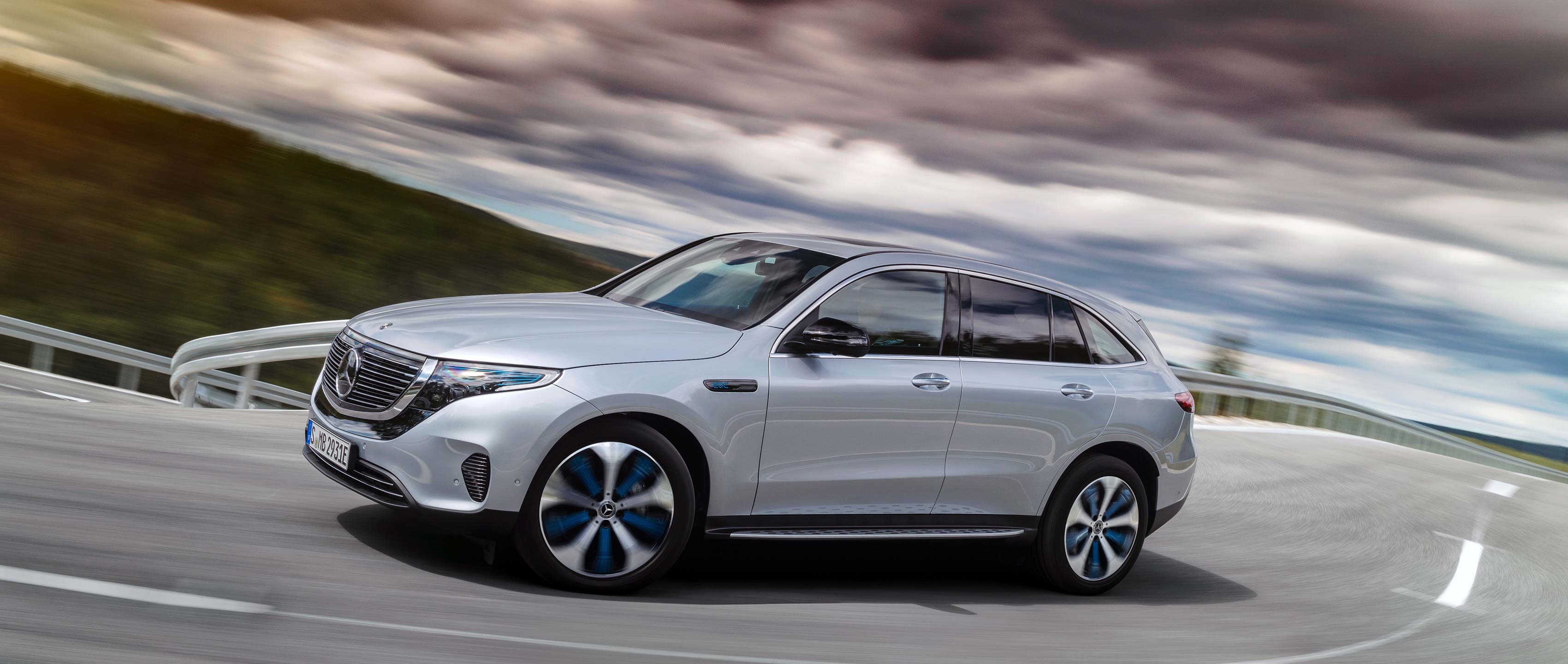
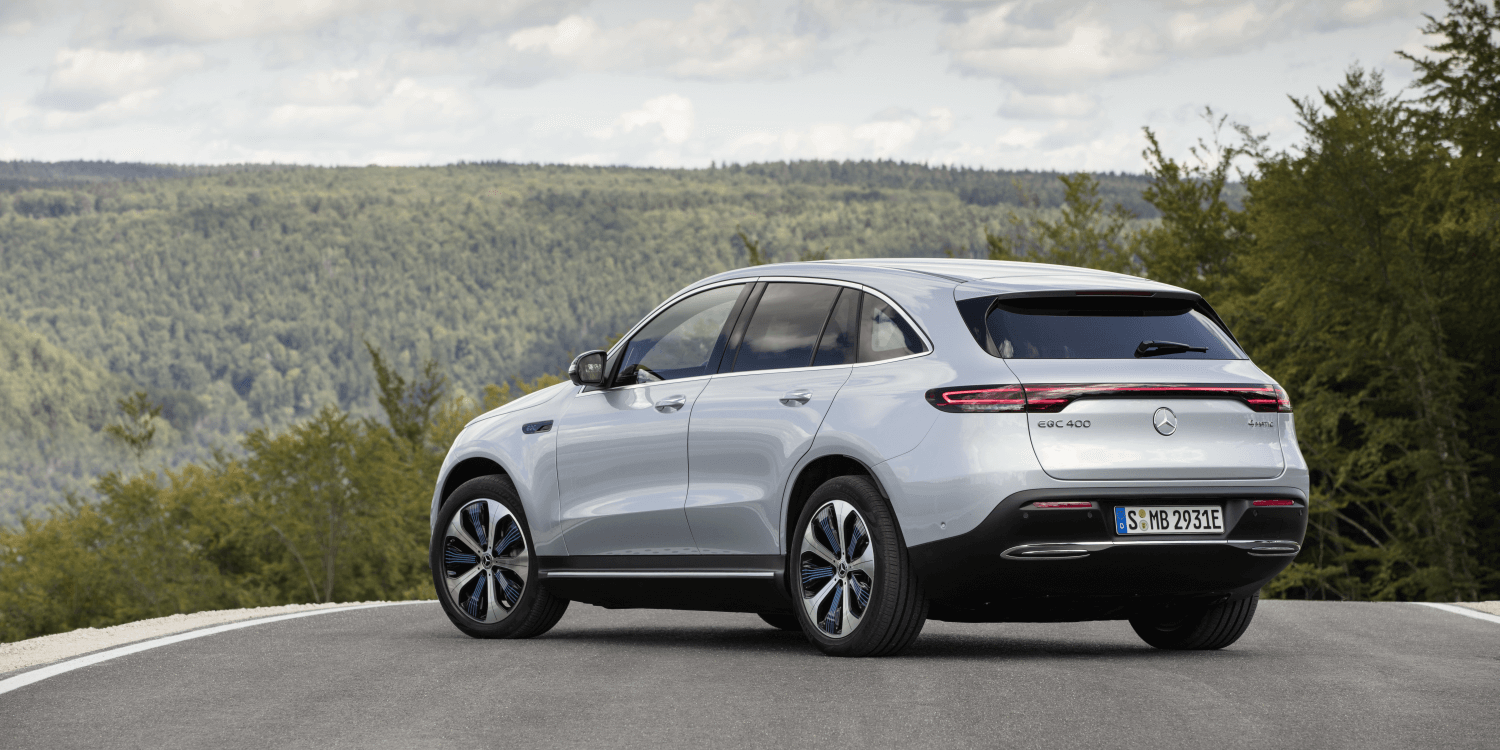
On the outside of the EQC, it looks identical to a GLC except for the front and the back. The front is different as since there is no engine there and it doesn’t need to be cooled, Mercedes has covered up the radiator grill which, in a regular car, would cool the engine. Although Mercedes has closed up the grill, there are still the chrome bars going across where the grill would be so the traditional image of the front of a Mercedes hasn’t been lost. Going around the back of the car, the first thing you notice is that instead of the traditional 2 taillights, there is a light bar spanning the width of the car which comes out of the taillights and meets in the centre of the boot or trunk lid. The EQC also has different headlights, taillights and wheels to the regular GLC.

At the moment, Mercedes is only going to bring one version of the EQC to Australia. The EQC 400 4MATIC has 2 electric motors which drive the different axles, thus giving it all wheel drive. The EQC 400 makes 3ooKW(402bhp) of power and 760NM (561 lb-ft) of torque. This is able to propell the EQC to 100 km/h (62 mph) from nothing in 5.1 seconds. It also weighs 2,425 kilograms (5,346 Lbs) and can go 417 km (259 miles) on a full charge.

This will do it for this post, so I will see you back here next month. Remember, if you want help choosing the right car for you please get in touch on the Contact page.

Also, I’d love your comments or feedback on this or other posts. And please share this with your friends as I would like to get this a bit more well-known. Thanks.
EQC front and side
EQC side and back
GLC Side and back
GLC front and side

BMW X7

Hi guys, today I will be telling you all the important information about the new BMW X7, the new SUV from BMW. Since I haven’t got much more to say I’ll just get on with the show. I will also put a picture of one at the bottom of this post.

Like I said above, The BMW X7 is the new 7-seater SUV that was released by BMW into the Australian market earlier this month. It is also the only 7-seater car that the German car maker produces. Yes, I understand that you can get an X5 with 7 seats, but that car is basically an X5 with 2 foldable seats in boot. The X7 is a lot different to the X5 as with the 6th and 7th seats up there is still a respectable amount of room and since the X7 was designed to be a 7-seater, the people in these 2 seats will have more room than in the other car. This means that if you are struggling to decide between a 7-seat X5 or an X7 and you have an extra $7,000-$15,000 burning a hole in your pocket then go for the X7.
Comparisons between the X7 and X5 aside, the X7’s interior and exterior is inspired by the BMW 7 Series (This is rather common in German SUVs as the Mercedes-Benz GLC is inspired by the C-class, the Audi Q5 by the A5 and the BMW X6 by the 6 Series.) Being inspired by the 7 series, you would probably think that it is roughly the same length as the 7 Series and if you did, you would be surprised to hear that the X7 is actually 3.1 inches (3.9 centimetres) shorter than the 7 Series. Although being shorter than the 7 series, the starting price for the X7 is $31,000 more than the starting price of the 7 Series. The reasons for that, in my opinion, is because it has 2 extra seats and it cost more to build the body as it is taller than the 7 Series.

Being a BMW, the X7 gets the newest version of BMW’s infotainment, the “iDrive”. This system is one of the best infotainment systems in the entire car industry as it is very clear, very logical in the placement of everything and there is no lag at all between when you select an item and when that item appears on the screen. The system is controlled by touch, a wheel in the centre console and physical buttons and a thing called “gesture control”. Gesture control is when you move your hand in a certain way, then the car will most likely recognise that hand movement and make the infotainment system do the thing that that particular gesture is designed to tell it to do.

Being a luxury car, the X7 gets leather all through the inside of the car, including on the headliner, seats and dashboard. The seats in the front of the BMW X7 are obviously fully electric and are heated with cooling as an option. The window switches are solid metal and there are strips of metal all over the dashboard. In the back seats of the X7, the amount of leather is equal to the amount in the front seats. These seats can also reclined move forward and backward to provide more legroom to the people in those seats or to provide more to the people in the 3rd row. They are also heated as standard. There are 2 seating layouts available, you can either have it with a rear bench that can seat 3 or 2 “captains chairs” (these captains chairs are an option and will change this car into a 6-seater). The rearmost seats in this car are also leather but the most surprising thing is that they are heated (this may be an option but it could also be standard). The reason why this is surprising is because although lots of luxury cars and SUVs have heated rear seats, no other car has heated seats in the 3rd row.

Moving outside the BMW X7, the first thing you notice is the absolutely gigantuan chrome grille feeding air into the engine. On both sides of this behemoth grille, are laser-headlights. These headlights basically use ultra bright and powerful lasers to see down the road in front of them. As well as these, the X7 also has LED daytime running lights and brake lights. This is not all that special as pretty much all luxury cars and SUVs have LED daytime running lights and brake lights, but the laser headlights are pretty special as only really expensive cars have them. As you move along the side of the car you will notice the chrome line around the outside of the windows and the strip of chrome across the bottom of the door. When you reach the back of the car you will notice the power tailgate or boot lid. This spilts into 2 so if you want to, you can the bit that folds down as a seat so you can look out over the world. This power tailgate is also most likely hands-free, which means that you can just wave your foot underneath the car and when it senses your foot, the boot or tailgate will open. In some luxury cars, you can also do this to close the boot as well as open it.

At the moment, there are only 2 versions available. These are the XDrive 40i and the XDrive 50i. The XDrive 40i has a 3 litre turbo charged straight 6 that makes 335 hp or 250kw and 335lb-ft or 450Nm of torque. The XDrive 50i is a little different as it has a 4.4 litre turbocharged V8 that makes 456 hp or 340 kw and 479 lb-ft or 649 Nm of torque.

This will do it for this post, so I will see you back here next month. Remember, if you want help choosing the right car for you please get in touch on the Contact page.

Also, I’d love your comments or feedback on this or other posts. And please share this with your friends as I would like to get this a bit more well-known. Thanks

BMW X7

Astons at Geneva

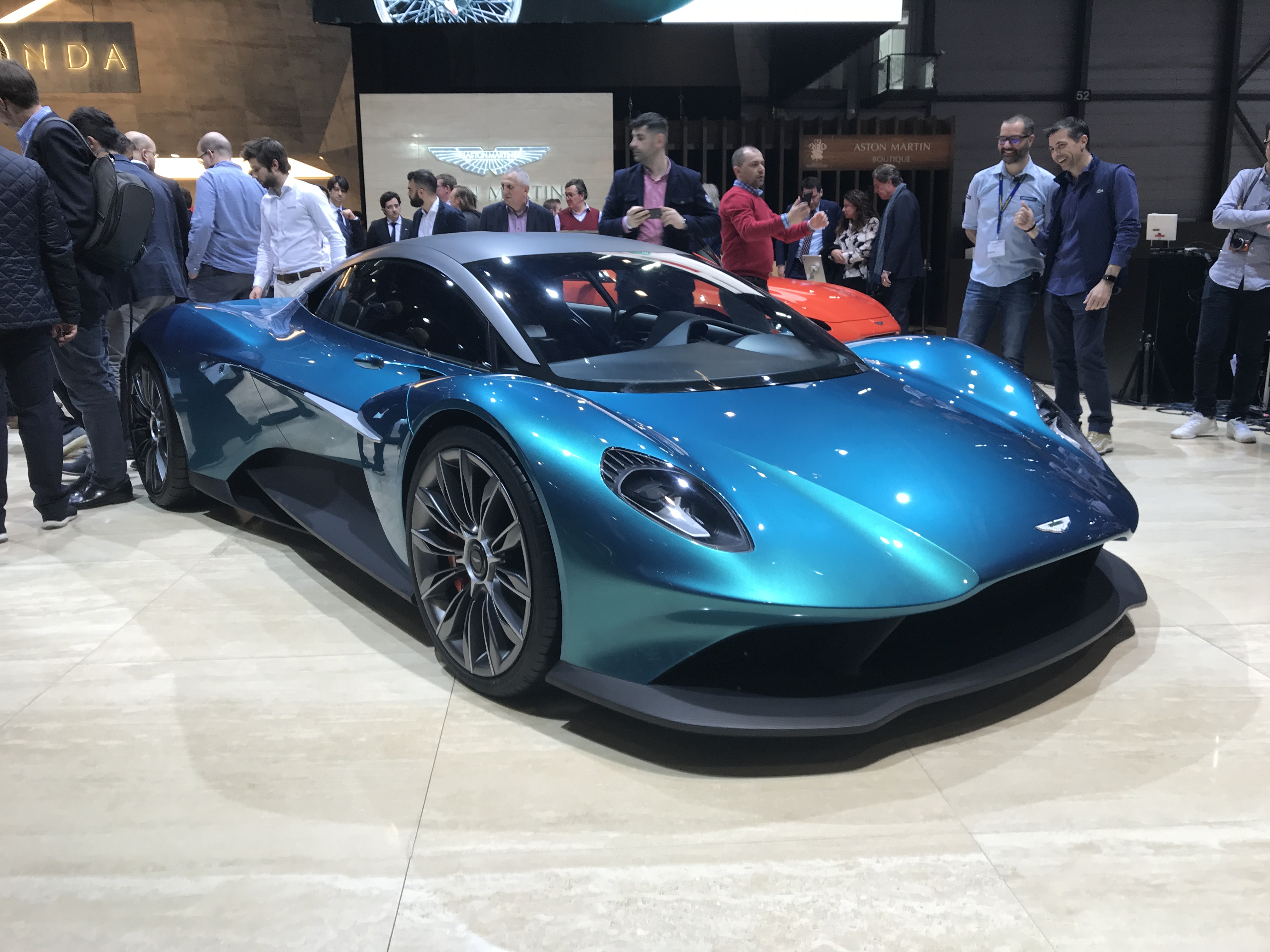
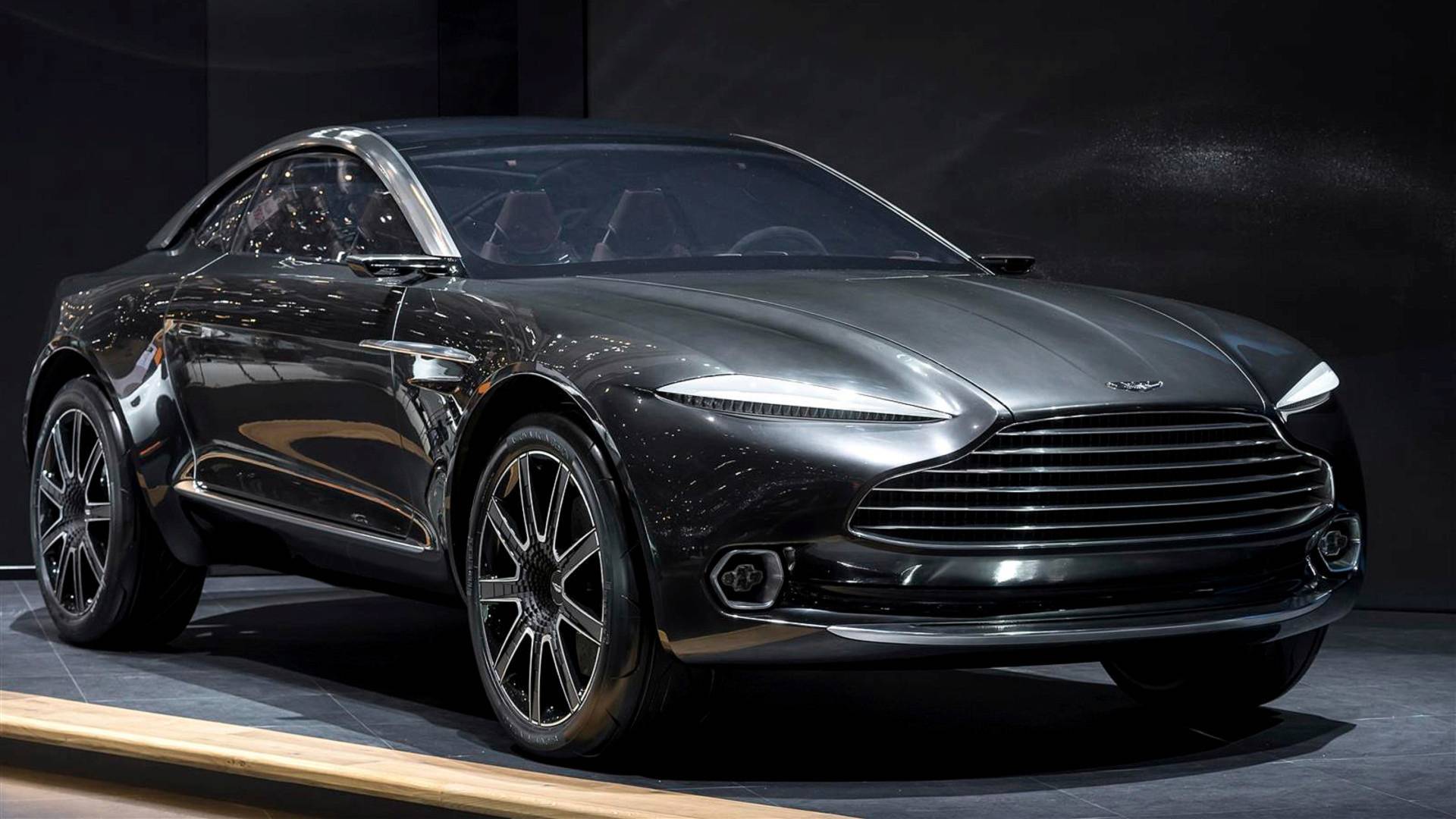
Hello everybody, Today I will be informing you about the 3 new astons revealed at the Geneva Motor Show, which was on earlier this year or late last year. Since some of us are not wealthy enough to afford an Aston Martin but those of you can can afford one and are looking to buy one is next couple of years, this should hopefully give you advice on which one to get, mixed in with your opinions. All the cars I mention in this I will put a photo of at the bottom of this post.

Aston Martin Valkyrie: The 150 Aston Martin Valkyries that will be made road-legal have just started production and each unit has already been sold at the cost of about $4.5M (I’m not joking). The engine powering this car is a 6.5 L V12 developed by Cosworth, a maker of insanely powerful engines that sometimes find themselves in F1 cars. This engine and an electric motor together create 1,160 horsepower and the engine can rev at up to 11, 000 RPM, which is just mind boggling. It has a top speed of 402 km/h or 250 mph but sadly the o-100km/h or 0-62mph time has not been confirmed, although I think it would be down in the mid to low 2 second range. It weighs just 1.1 tons so it has a power to weight ratio of 1 horse power to 1 kg, which has not been seen in the world of road cars since god-knows-when. Expect to never see this car unless you live very close to a race-track, have one, are a motoring journalist or live in an area with some of the smoothest roads around.

Aston Martin Vanquish vision: The Aston Martin Vanquish vision is quite similar to the Valkyrie on the outside but the inside and all the inner workings are very different. Let’s start with the engine: While the Valkyrie has a 6.5 litre V12 hybrid with 1,160 horsepower, the Vanquish vision is powered by a twin-turbo V6 hybrid to get performance numbers that have not yet been revealed although I expect it to have between 500 and 600 horsepower and be able to do 0-100 or 0-62 in low 3 seconds to high 2 seconds territory. Another difference is what the car is made out of: while the Valkyrie is mostly Carbon-fibre, the vanquish Vision has an aluminium body. The fact that the Vanquish is made of aluminium instead of carbon-fibre, there would be more weight than Valkyrie. Even though weight figures haven’t been announced yet, I would expect the vanquish to be no heavier than 1.5 tons. The Vanquish will start production in 2022 and 7,000 to be made so if you are thinking of buying one you might want to start saving up as it will probably cost $400,000-$700,000, or in other words, quite a lot.

Aston Martin DBX: Aston Martin’s ultra-luxury sub-brand Lagonda ( Lagonda to Aston martin is like what Maybach is to Mercedes-Benz) has gone and made an SUV. This surprised me at first but as I soaked it in I realised what a good idea it is. It’s a good idea as lots of people out there probably would love to own an Aston Martin and probably have the money for one, but they just don’t want a car that is noisy and bruises your bum when you go over a bump a little too enthusiastically. This Aston Martin is quite different though as it is electric so it is as quiet as they come and since it has been made by Lagonda, Aston’s ultra-luxury sub-brand, it should be one of the most-comfortable cars Aston Martin makes, after the Rapide, their 4-door sedan (yes, they do have a 4-door sedan) and potentially the DB-11. It is also an SUV so it is the most practical car Aston makes as it has the biggest boot of any of their cars and has back-seats that a reasonable-sized person can actually fit in. So if you want an Aston but don’t want a sports car, the Rapide and this are your only option.

Remember, if you want help choosing the right car for you please get in touch on the Contact page.

Also, I’d love your comments or feedback on this or other posts. And please share this with your friends as I would like to get this a bit more well-known. Thanks

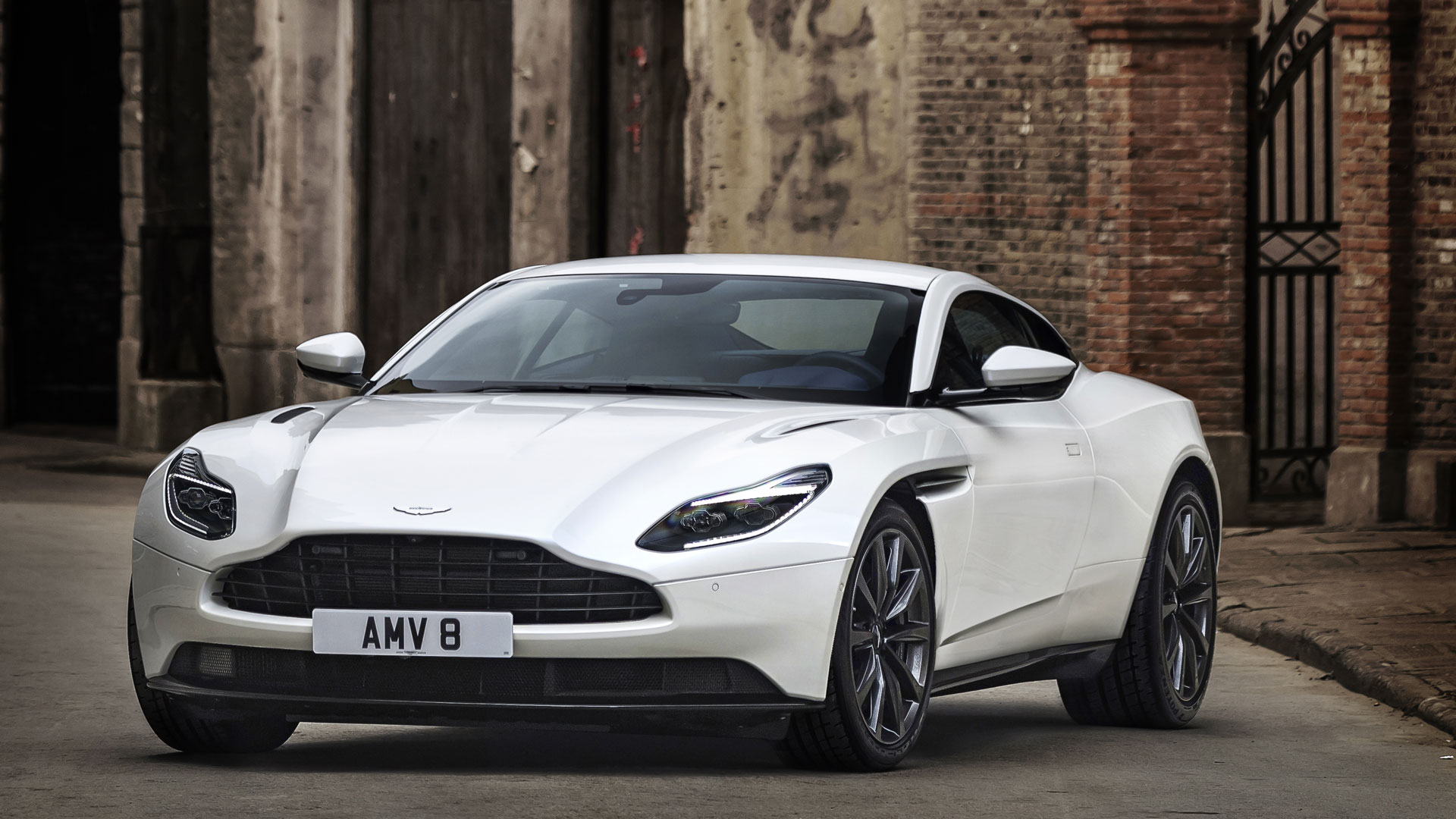
Aston Martin DB-11
Aston Martin Rapide
Aston Martin Valkyrie
Aston Martin Vanquish Vision
Aston Martin DBX